

That said, "most cases" isn't "all cases." Specific situations — interest earnings, estate inclusion, annuity payouts, employer-provided coverage — can trigger real tax obligations. Knowing the difference protects your family from an unwelcome surprise.
This article covers the general rule, the six exceptions that can create tax liability, how policy type affects treatment, and concrete strategies to keep more of the benefit out of the taxman's reach.
Key Takeaways
- Lump-sum death benefits paid to a named living beneficiary are generally excluded from federal income tax.
- Taxes apply when proceeds earn interest, are received as an annuity, fall into a taxable estate, or stem from employer group coverage above $50,000.
- Permanent life policies (whole/universal) can create tax liability when cash value is accessed or surrendered.
- Strategic moves — naming a living beneficiary, establishing an ILIT, or transferring ownership — can meaningfully reduce estate tax exposure.
- Policy ownership, beneficiary structure, and estate size all interact — getting these details right before a claim is filed matters.
The General Rule: Life Insurance Death Benefits Are Usually Tax-Free
The IRS is direct on this point: life insurance proceeds received as a beneficiary are generally not included in gross income, and "you don't have to report them." No income tax form is required for a standard lump-sum death benefit — though keeping documentation in your records is recommended.
What Counts as a Death Benefit
The death benefit is the face amount of the policy — adjusted for any outstanding loans or prior withdrawals — that the insurer pays when the insured person dies. This tax-free treatment applies across all major policy types:
- Term life — pure death benefit with no cash value; the simplest tax scenario since there's nothing to complicate the exclusion
- Whole life — permanent coverage that builds cash value, but the death benefit itself still qualifies for tax-free treatment
- Universal life — flexible permanent coverage with an investment component; the payout to beneficiaries remains excludable under IRC 101(a)
All three qualify for the IRC 101(a) exclusion when the payout goes to a named living individual as a lump sum.
Named Beneficiary vs. The Estate
When a named individual receives the proceeds, the death benefit bypasses the estate entirely — no probate, no estate tax exposure on that amount. When the estate is named as beneficiary, the proceeds become part of the taxable estate and may trigger estate taxes if the total exceeds federal thresholds.
When Life Insurance Death Benefits Can Be Taxed
The general rule holds — but six specific situations can create a tax liability. Knowing which ones apply to your situation is the difference between a plan that works and one that surprises your family.
1. Estate Tax Inclusion
If the deceased named their estate as beneficiary — or retained what the IRS calls "incidents of ownership" (the right to change beneficiaries, surrender the policy, borrow against it, or assign it) — the death benefit becomes part of the taxable estate.
Current federal basic exclusion amounts:
| Year of Death | Basic Exclusion Amount |
|---|---|
| 2024 | $13,610,000 |
| 2025 | $13,990,000 |
| 2026 | $15,000,000 |
Source: IRS Estate and Gift Tax Updates
Estates exceeding these thresholds owe tax on the excess. High-net-worth families and business owners with large policies should pay close attention — estate tax planning around life insurance is one of the highest-impact opportunities available.

2. Interest on Deferred or Installment Payouts
When a beneficiary chooses installment payments instead of a lump sum, the insurer holds the principal and invests it. The principal remains tax-free. The interest it earns is taxable ordinary income and must be reported each year it's received.
3. Annuity Payout Option
Electing an annuity settlement means each payment contains two parts: a principal portion (excluded from income) and an interest/earnings portion (taxable). Beneficiaries must track this split carefully — and the insurer's 1099-R will typically show the taxable amount.
4. Employer-Provided Group Life Insurance Above $50,000
Under IRC Section 79, employer-paid group term life coverage up to $50,000 is excluded from an employee's taxable income. Coverage above that threshold creates imputed income — the employer-paid cost of excess coverage is treated as additional wages, appearing on the employee's W-2 in boxes 1, 3, and 5 (identified separately in box 12 with Code C).
This affects living employees, not beneficiaries. Many workers don't realize it's happening until the W-2 arrives.
5. The Goodman Triangle (Third-Party Ownership)
When the policy owner, the insured, and the beneficiary are three different people, the IRS may treat the death benefit as a taxable gift from the policy owner to the beneficiary — the doctrine from Goodman v. Commissioner. The annual gift tax exclusion is $19,000 per recipient for 2025, so payouts above that threshold could trigger gift tax attributed to the policy owner.
Aligning the insured and the policy owner as the same person eliminates this exposure in most cases.
6. Transfer-for-Value Rule
If a life insurance policy was sold or assigned to a new owner for valuable consideration (money or other assets), the transfer-for-value rule kicks in. The new owner can only exclude their cost basis (what they paid plus subsequent premiums) from income — proceeds above that amount may be taxable.
Statutory exceptions include transfers to:
- The insured themselves
- A business partner of the insured
- A partnership in which the insured is a partner
- A corporation in which the insured is a shareholder or officer
Work with a qualified advisor before transferring any policy — the wrong structure can convert a tax-free benefit into a taxable one.
Tax Treatment by Policy Type
Term Life Insurance
Term policies provide a pure death benefit for a defined period — no cash value, no investment component. When proceeds go to a named living beneficiary as a lump sum, they are income-tax-free in nearly all cases (the exception: interest earned if proceeds are paid in installments rather than a lump sum). With no cash value to access during your lifetime, there are simply fewer taxable moving parts.
Whole and Universal Life Insurance
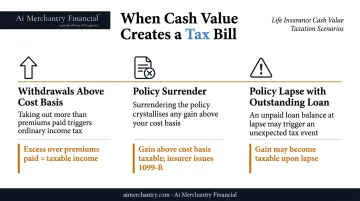
Permanent policies accumulate cash value over time. The death benefit paid to beneficiaries is still income-tax-free. The tax issue arises during the policyholder's lifetime when they access that cash value:
- Withdrawals above cost basis — the amount exceeding total premiums paid is taxable income
- Policy surrender — gain above the cost basis is taxable; the insurer issues a 1099-R
- Policy loans — generally not taxable while the policy remains in force, but if the policy lapses with an outstanding loan, the gain can become taxable
The ACLI 2025 Fact Book reports aggregate policy loans outstanding reached $147.1 billion at year-end 2024, up 6.3% from the prior year. For anyone holding a permanent policy, understanding when that access triggers a tax bill is a core part of retirement and estate planning.
Employer-Provided Group Term Life
Many employees receive group term life coverage as a workplace benefit. According to March 2025 Bureau of Labor Statistics data, 59% of private industry workers have access to employer-sponsored life insurance. What many don't realize: coverage exceeding $50,000 triggers imputed income added to taxable wages each year — even though no cash changes hands.
If your employer-provided coverage exceeds that threshold, it's worth reviewing your benefits enrollment and W-2 to understand how much is being reported as income.
Strategies to Minimize Tax Exposure on Life Insurance
Name a Living Individual as Your Beneficiary
This is the single most important step — and the easiest. Designating a named individual keeps the death benefit entirely out of the estate. There's no probate delay and no estate tax exposure on those proceeds.
Contrast this with naming "the estate" as beneficiary: proceeds get pulled into the estate, face potential estate taxes, and must pass through probate before heirs see a dollar.
Keep beneficiary designations current. Marriage, divorce, the birth of a child, or the death of a named beneficiary are all triggers to revisit your designations.
Establish an Irrevocable Life Insurance Trust (ILIT)
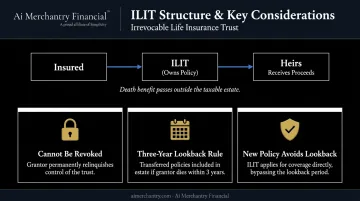
An ILIT owns the life insurance policy. Because the trust — not the insured — holds the policy, the death benefit bypasses the taxable estate entirely. The trust is named as beneficiary and distributes proceeds to heirs per its terms.
Key considerations:
- Once established, an ILIT cannot be revoked — the insured gives up direct policy control
- The three-year lookback rule applies: if an existing policy is transferred into an ILIT and the insured dies within three years, the proceeds are pulled back into the estate
- Starting a new policy owned by the ILIT from inception avoids the three-year issue entirely
This strategy is particularly valuable for high-net-worth families and business owners whose estates could face meaningful tax exposure. It requires working with an estate planning attorney to structure correctly.
Transfer Policy Ownership Strategically
Transferring ownership of an existing policy to another person — an adult child, for example — can remove the death benefit from your taxable estate. The same three-year lookback rule applies here: if the insured dies within three years of the transfer, the IRS pulls the proceeds back into the estate.
The lookback window makes timing critical — this isn't a strategy to implement hastily or without coordinating with a qualified advisor first.
Work with a Coordinated Advisory Team
Life insurance taxation sits at the intersection of insurance, tax law, and estate planning. No single professional owns all three areas.
A CPA, estate planning attorney, and financial advisor working together can assess your policy structure, estate size, and long-term goals to determine which approach fits your situation. Each brings a different lens — and gaps between them are where costly mistakes happen.
Ai Merchantry Financial's Collaborative Planning Network™ connects individuals, families, and business owners with professionals across these disciplines, so the right expertise is in the room when these decisions get made.
Tax Reporting: Forms You May Receive
Most beneficiaries receiving a standard lump-sum death benefit will not receive a tax form and are not required to report anything on their federal return.
Two forms appear in taxable scenarios:
| Form | When You'll See It | What It Reports |
|---|---|---|
| 1099-INT | Interest earned on deferred/installment payouts | Taxable interest income; report on your return |
| 1099-R | Annuity settlements, surrendered policies, certain insurance distributions | Taxable portion of payment; itemized on the form |
If you receive either form, consult a tax professional to confirm what you owe. If your situation involved an estate, a policy transfer, or a non-lump-sum payout, don't assume the full amount is tax-free even if no form arrives. These scenarios often carry tax implications that aren't automatically flagged by the IRS — catching them early prevents larger problems down the road.
Frequently Asked Questions
Are life insurance death benefits taxable as income?
In most cases, no. Death benefits paid to a named living beneficiary as a lump sum are excluded from federal gross income under IRC Section 101(a). Exceptions apply when interest is earned, the benefit falls into a taxable estate, or the payout is structured as an annuity.
Do beneficiaries need to report life insurance proceeds on their federal tax return?
For standard lump-sum payouts, no reporting is required. If any portion is taxable — such as interest income on deferred payments — the beneficiary will typically receive a 1099-INT or 1099-R and must report that specific amount.
What happens if no beneficiary is named?
Proceeds are paid to the deceased's estate, potentially exposing them to estate taxes and routing them through probate before heirs receive anything.
Can life insurance proceeds be subject to estate tax?
Yes, if the total estate — including life insurance proceeds — exceeds the federal basic exclusion amount, the excess may be subject to estate tax. Naming a beneficiary directly or using an ILIT are the two most effective ways to avoid this.
What is an ILIT and how does it reduce taxes?
An Irrevocable Life Insurance Trust owns the life insurance policy, keeping the death benefit outside the insured's taxable estate so it passes to heirs — according to the trust's terms — free of estate taxes.
Does it matter whether the death benefit is paid as a lump sum or in installments?
Significantly. Lump-sum payments are generally tax-free. Installment and annuity payouts generate interest that is taxable as ordinary income. Beneficiaries should understand this distinction before selecting a payout option.